A landmark partnership brings handpump maintenance and water quality monitoring to the heart of northern Uganda.
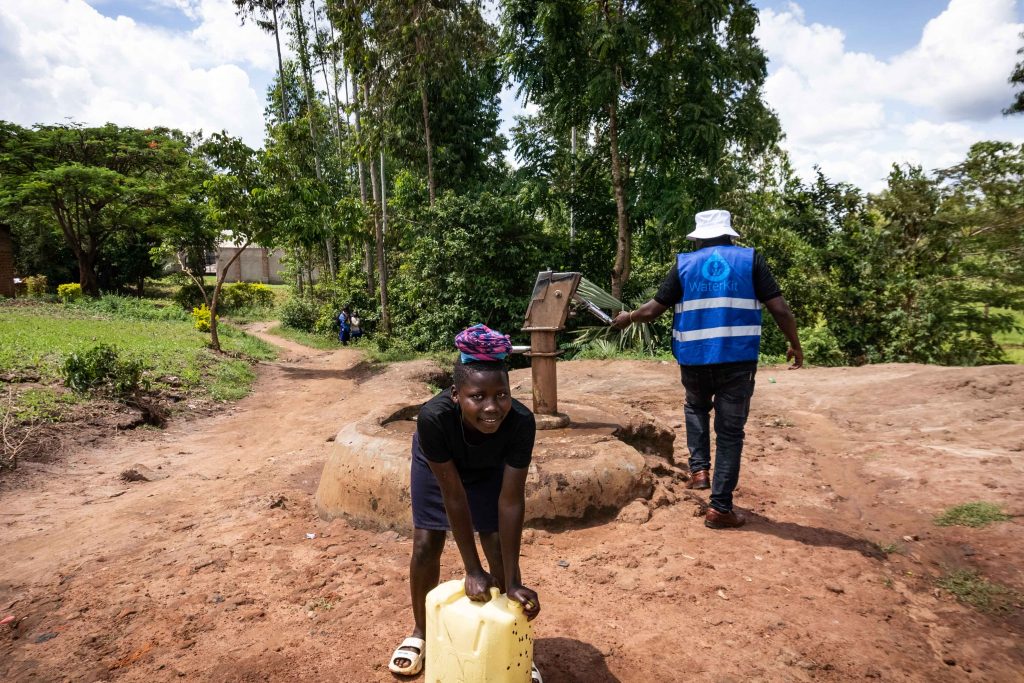
When a handpump breaks in a rural community, the silence that follows is louder than anything anyone outside that community ever hears. The children who used to race each other to the pump in the morning now wake up to a different reality. The women who once filled their jerry cans in twenty minutes now walk an hour, sometimes two, to the nearest alternative. The farmer who relied on that water point to mix crop treatments watches his yields fall. And the community health worker who spent months convincing families to stop drinking from the swamp watches that hard-won behaviour change quietly unravel.
In Kole District, northern Uganda, this silence has been a recurring reality for too long.
Today, WaterKit Institute Limited is proud to announce a formal partnership with Kole District Local Government to change that — permanently.
A Partnership Rooted in Shared Purpose
The partnership between WaterKit Institute and Kole District Local Government brings together the technical capacity, community networks, and programme expertise of WaterKit with the local authority, district reach, and government accountability structures of the district. Together, we are implementing a comprehensive handpump operation and maintenance programme and a systematic water quality monitoring system across rural communities in Kole District.
This is not a short-term intervention. It is a structural solution — designed to outlast the programme, embed itself in district systems, and create a self-sustaining model that Kole District can own, manage, and replicate for decades to come.
The partnership was formalised through a Memorandum of Understanding signed between WaterKit Institute Limited and Kole District Local Government, committing both parties to shared goals, defined roles, and mutual accountability for results.
What the Partnership Covers
Handpump Operation and Maintenance
At the heart of this partnership is a district-wide handpump operation and maintenance system built on three interlocking levels — community, sub-county, and district — each with clearly defined responsibilities and the capacity to fulfil them.
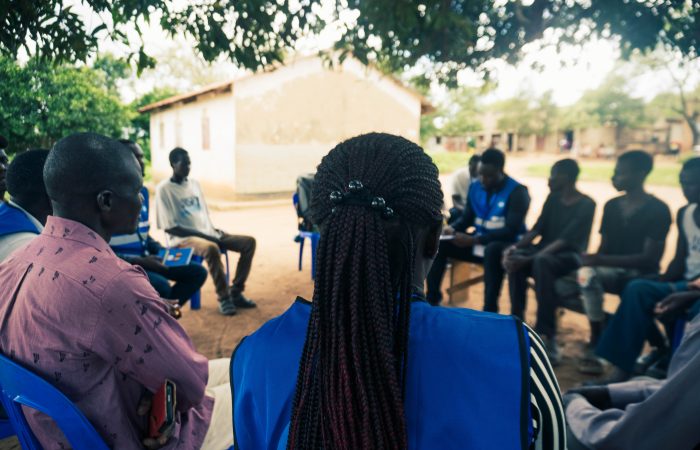
At community level, WaterKit Institute is training and equipping handpump caretakers in every participating village. These caretakers — selected by their own communities and prioritising women — are trained to conduct daily visual inspections, identify early signs of mechanical failure, tighten loose bolts and replace worn seals, maintain cleanliness around the water point, and collect water point usage data. Each caretaker is equipped with a basic maintenance kit and connected to a sub-county level mechanic through a simple SMS reporting system.
At sub-county level, WaterKit Institute is training and certifying a network of community pump mechanics — one per sub-county — capable of conducting more complex repairs including rod replacement, cylinder overhaul, and borehole disinfection. These mechanics are supported with a full toolkit, a stock of common spare parts, and a documented rate card so that communities know exactly what repairs should cost and are protected from overcharging. Sub-county mechanics are registered with the District Water Office and report directly to the District Water Officer on a monthly basis.
At district level, Kole District Local Government — through the District Water Office — provides technical oversight, coordinates the supply chain for spare parts, maintains a district-wide database of water point functionality, and escalates major structural failures to national-level contractors where necessary. WaterKit Institute supports the District Water Office with data management tools, quarterly functionality reports, and technical backstopping for complex repairs.
Underpinning the entire system is a community-managed maintenance fund at every water point. Each household connected to a borehole contributes a small monthly fee — set by the community itself — into a ring-fenced fund managed by the Water User Committee. WaterKit Institute trains Water User Committees in fund management, record keeping, and transparent reporting to the community. The District Water Office provides oversight and audit support. This fund covers the cost of routine maintenance and minor repairs, ensuring that a broken bolt or worn seal never again becomes a broken pump simply because there was no money to fix it.
Water Quality Monitoring
Clean infrastructure is only half the battle. Water that flows freely from a rehabilitated handpump can still carry bacteria, excess fluoride, or other contaminants that make communities sick without their knowledge. That is why water quality monitoring is the second and equally critical pillar of this partnership.
WaterKit Institute and Kole District Local Government are jointly implementing a systematic water quality monitoring programme covering every participating water point in the district. The programme operates on two levels.
Community-level monitoring is conducted monthly by trained Water Quality Monitors — one per village, selected by the community and trained by WaterKit Institute in the use of portable field testing kits. Monitors test for bacterial contamination, turbidity, pH, and free chlorine residual at community water points, record results in a standardised logbook, and report findings to the sub-county Water User Committee and the District Water Office through a mobile data collection platform. Where results fall outside safe limits, monitors are trained to issue immediate guidance to the community, deploy household treatment solutions, and trigger a response from the sub-county mechanic or District Water Office.
District-level monitoring is conducted quarterly by the District Water Office with technical support from WaterKit Institute. Quarterly monitoring uses laboratory-grade testing for a broader suite of parameters including E. coli, total coliforms, fluoride, iron, manganese, nitrates, and arsenic. Results from all monitored sources are compiled into a district water quality database maintained by the District Water Office and shared with the Ministry of Water and Environment as part of Uganda’s national water quality reporting framework.
All water quality results — both community and district level — are shared publicly. Communities receive their results in plain language at community meetings. Results are also posted at the water point itself on a simple colour-coded board that any community member can read, whether or not they are literate. Green means safe. Yellow means caution — boil or treat before drinking. Red means do not use this source — a safe alternative will be provided while the problem is investigated and resolved.
We believe communities have the right to know what is in their water. Transparency is not a courtesy in this programme. It is a principle.
Why Kole District
Kole District sits in the Lango sub-region of northern Uganda — a region with a history of displacement, conflict, and underinvestment in basic infrastructure. Communities here are resilient and determined. But resilience alone cannot fix a broken pump or detect fluoride in groundwater.
Kole also presents a particular technical challenge. Hydrogeological surveys conducted by WaterKit Institute during programme design identified significant variation in groundwater quality across the district — with elevated fluoride concentrations in several sub-counties, high iron levels in others, and bacterial contamination risk elevated by the density of pit latrines in some village clusters. A one-size-fits-all approach would have missed these variations entirely. Our partnership with the District Water Office means that the programme is designed around Kole’s specific geology, infrastructure, and community geography — not imported from somewhere else and applied without adaptation.
The District Water Officer for Kole, working alongside WaterKit Institute’s field team, has been central to the programme design from the very beginning. This is his district. These are his communities. And this programme will be his to run long after WaterKit Institute’s direct implementation role has ended.
The Goal: A District That Manages Its Own Water
The measure of success for this partnership is not the number of pumps fixed or the number of water quality tests conducted. Those are outputs. The outcome we are working toward is a Kole District that no longer needs an outside organisation to keep its water infrastructure running.
By the end of this partnership, Kole District will have a trained and equipped network of community pump caretakers and sub-county mechanics capable of maintaining every handpump in the district. It will have a functioning community financing system that pays for routine maintenance without donor support. It will have a water quality monitoring system embedded in district government structures, feeding data into national reporting frameworks. And it will have the institutional knowledge, the documented systems, and the human capacity to train the next generation of caretakers, mechanics, and water quality monitors itself.
That is what sustainability looks like. Not a pump that works today. A district that keeps pumps working, forever.
A Word From the Partnership
“For too long, our communities have watched pumps break and waited months — sometimes years — for repairs. This partnership gives us a system, not just a fix. We are building something that belongs to Kole District.”
— District Water Officer, Kole District Local Government
“Water security is not achieved by drilling boreholes. It is achieved by building the systems that keep those boreholes working and the water safe. That is exactly what this partnership is designed to do — and we are proud to be doing it alongside Kole District Local Government.”
— WaterKit Institute Limited
Get Involved
This partnership is made possible by the commitment of Kole District Local Government and the support of donors and partners who believe that clean water is a right, not a privilege. If you would like to support the expansion of this programme — to more sub-counties, more communities, and more water points across Kole District, we would love to hear from you.
📧 info@waterkitinstitute.org
📞 +256784069308
🌍 WaterKit Institute , Uganda