From broken pumps and paper logbooks to real-time data and rapid response, WaterKit Institute is building the digital backbone of rural water management in Uganda.
The Problem With Not Knowing
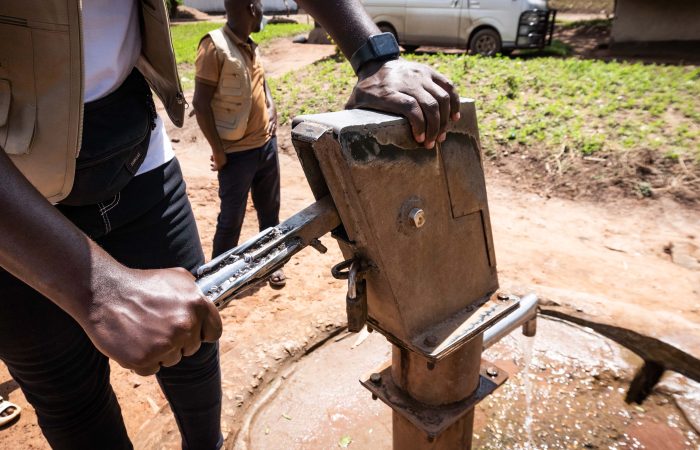
In rural Uganda, a handpump rarely breaks all at once. It gives warning signs first. A handle that feels looser than it used to. A flow rate that has quietly dropped over two weeks. A faint metallic smell that the community has learned to ignore. A Water User Committee chairperson who noticed something was wrong three months ago but had no reliable way to report it to anyone with the authority or tools to respond.
By the time a pump is formally reported as non-functional, it has usually been struggling for weeks. And by the time a repair team arrives, if one arrives at all, the community has long since returned to the unprotected spring, the seasonal stream, or the neighbour’s well that everyone knows is contaminated but is at least accessible.
The handpump is not the only thing that has broken down. The information system around it has broken down too.
This is the problem that WaterKit Institute set out to solve, not just with better mechanics or more spare parts, but with smarter, more connected, more transparent information systems that give every stakeholder in the water supply chain, from the village pump caretaker to the District Water Officer to the national Ministry the data they need, when they need it, in a form they can actually use.
Building a Digital System for Rural Water Management
WaterKit Institute has developed and is deploying an integrated digital platform for community handpump management, a system designed specifically for the realities of rural Uganda, where smartphone penetration is growing but internet connectivity is patchy, where literacy levels vary, and where the most important data collectors are not engineers in offices but women and men living beside the very pumps they are monitoring.
The platform has four interconnected components: a mobile data collection application, a real-time pump monitoring dashboard, an automated alert and response system, and a community-facing water point information board. Together, they form a continuous loop of data collection, analysis, response, and accountability that keeps pumps working and water quality safe.
Component One: The Mobile Data Collection App
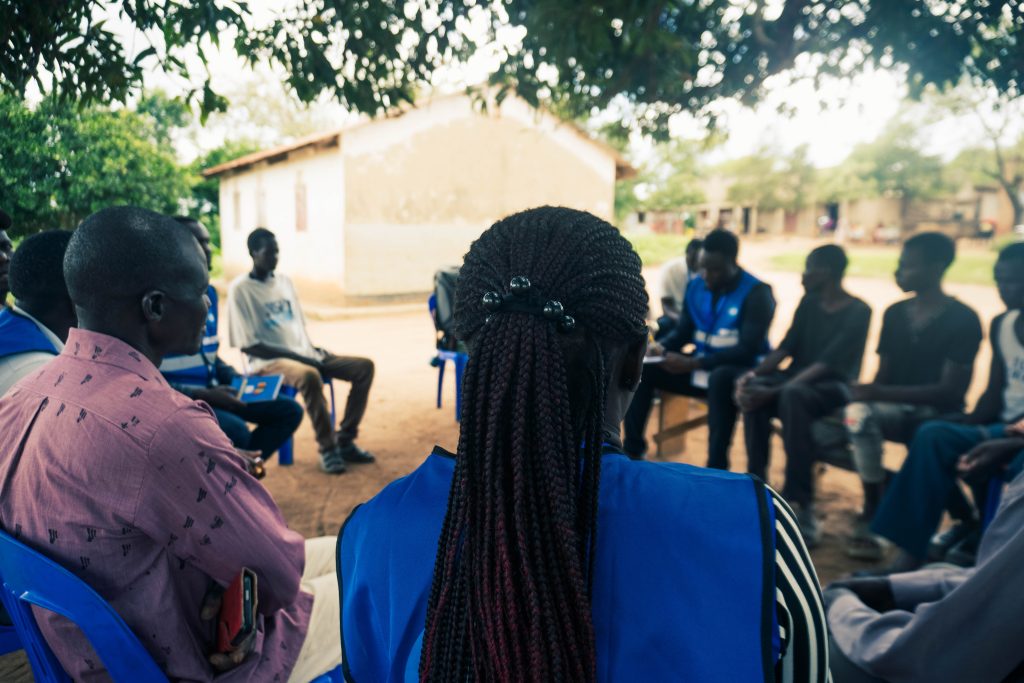
At the community level, every pump caretaker and Water Quality Monitor trained by WaterKit Institute is equipped with a basic smartphone and trained to use a simple mobile data collection application built on open-source survey platforms adapted for low-literacy and low-connectivity environments.
The application is available in English and Luo, the primary local language in northern Uganda, and uses icon-based navigation so that caretakers with limited literacy can operate it confidently. Every form is designed to take no more than three minutes to complete.
Caretakers submit a weekly pump status report covering eight simple indicators: whether the pump is functional, the approximate flow rate, whether there are any unusual sounds or physical changes, the cleanliness of the surrounding apron and drainage channel, whether the Water User Committee maintenance fund has been updated, the number of households currently using the point, and any community concerns reported to the caretaker that week.
Water Quality Monitors submit a monthly water quality report recording the results of their field tests for bacterial contamination, turbidity, pH, and free chlorine residual, along with a photograph of the test result strip and a simple rating of safe, caution, or unsafe based on pre-set thresholds built into the application.
Critically, the application works offline. In areas with no mobile data connectivity, caretakers complete their forms offline, and the data syncs automatically the next time their phone connects to a network, whether that is at the sub-county trading centre, a market day, or a district office visit. No data is lost. No report is missed because the signal was poor.
Every submission is automatically timestamped, GPS-tagged to the specific water point, and uploaded to the central WaterKit database in real time, creating a continuously updated, spatially referenced record of every pump and every water source in the programme area.
Component Two: The Real-Time Dashboard
The data collected by community caretakers and Water Quality Monitors flows into a real-time monitoring dashboard accessible to WaterKit Institute field teams, the District Water Office, and, in a read-only public version, to anyone with an internet connection.
The dashboard displays every monitored water point on an interactive map of Kole District, colour-coded by current status. Green points are fully functional with acceptable water quality. Amber points have a reported issue under investigation. Red points are non-functional or have a water quality result outside safe limits. Grey points have a missed report triggering an automatic follow-up to the caretaker.
For each water point, the dashboard displays a complete history: every caretaker report, every water quality test result, every maintenance visit, every repair, every fund balance update, and every change in functional status going back to the first day the pump was registered in the system. A District Water Officer reviewing the dashboard can see at a glance not just which pumps are broken today, but which pumps have a pattern of recurring faults, which sub-county mechanics are responding fastest, which Water User Committees are maintaining their funds, and which water sources have shown deteriorating quality trends over the past six months.
This kind of longitudinal, spatially referenced data has never existed before for rural water points in Kole District. It transforms water management from reactive fixing things after they break to predictive, identifying pumps at risk of failure before they fail and prioritising preventive maintenance where it will have the greatest impact.
The dashboard also tracks financial data. Every Water User Committee maintenance fund transaction, including contributions collected, repairs paid for, and balances held, is recorded in the system. Fund managers submit monthly financial reports through the mobile app, and the dashboard flags any fund that falls below the minimum threshold needed to cover a standard repair. District Water Office oversight is therefore not dependent on physical visits or paper audits. It happens continuously, in the background, through the data.
Component Three: The Automated Alert and Response System
Data is only valuable if it triggers action. The third component of WaterKit Institute’s digital platform is an automated alert and response system that converts pump status data into immediate, targeted notifications to the right person at the right level of the maintenance chain.
When a caretaker submits a report indicating that a pump is non-functional or has a suspected mechanical fault, the system automatically generates an SMS alert to the sub-county pump mechanic, the Water User Committee chairperson, and the WaterKit Institute field officer for that area. The alert includes the GPS location of the pump, the nature of the reported fault, the contact details of the caretaker, and a response deadline, typically 48 hours for a preliminary assessment and five working days for a completed repair.
When a Water Quality Monitor submits a result that falls outside safe limits, the system generates an immediate SMS alert to the community health worker, the sub-county health assistant, and the WaterKit field officer, along with a pre-written community advisory message in Luo that the monitor can share at the water point while the response is being organised.
When a caretaker misses a scheduled weekly report, the system sends an automated reminder SMS to the caretaker and, if the report remains missing after 24 hours, a notification to the WaterKit field officer to follow up. Missed reports are treated as a signal — they may mean the caretaker is unwell, the phone is out of charge, or something has happened at the water point that needs investigation.
Every alert, every response, and every resolution are logged in the system, creating a complete audit trail of how quickly faults were reported, how quickly they were responded to, and how long communities waited for their water to be restored. This response time data is reviewed monthly by WaterKit Institute and shared quarterly with the District Water Office as part of programme performance reporting.
The system has built-in escalation logic. If a fault reported at the community level is not resolved within the five-day response window, it automatically escalates to the District Water Office. If it remains unresolved after ten days, it escalates to WaterKit Institute senior management. No fault can disappear into an inbox or be forgotten in a filing cabinet. The system does not forget.
Component Four: The Community Water Point Information Board
Technology that only lives on smartphones and office dashboards does not serve the community member who does not own a smartphone and never visits a district office. The fourth component of WaterKit Institute’s digital system bridges the gap between digital data and community transparency through a simple, durable, weatherproof information board installed at every water point.
The board, laminated and mounted on a steel post beside the pump, displays four pieces of information updated monthly by the caretaker: the current functional status of the pump, the most recent water quality result expressed as a simple colour rating, the current balance of the Water User Committee maintenance fund, and the name and phone number of the sub-county mechanic to call in case of a breakdown.
The board requires no electricity, no internet, and no smartphone to read. It is designed so that a community member with no formal education can look at it and understand, in under thirty seconds, whether their water is safe, whether their maintenance fund is healthy, and whom to call if something goes wrong.
The information on the board is drawn directly from the digital system. When a caretaker updates their weekly report on the mobile app, the system generates a printable monthly summary that the caretaker prints at the sub-county trading centre and uses to update the board. Digital data and physical transparency are kept permanently in sync.
What the Data Is Already Telling Us
Since deploying the platform across the initial programme area in Kole District, the data has already revealed patterns that would have been invisible under a paper-based system.
Pump failure rates spike in the months immediately following the long rains, March through May, as increased groundwater flow puts additional stress on cylinder seals and pump rods that are already worn. This finding has allowed WaterKit Institute and the District Water Office to schedule preventive maintenance visits in February before the rains arrive, targeting the pumps that historical data identifies as highest risk. Early evidence suggests this is reducing in-season breakdowns significantly.
Water quality results show a consistent pattern of bacterial contamination spikes in the two weeks following heavy rainfall events, particularly at shallow wells and unprotected springs, but also at some boreholes where surface water ingress around damaged casings is suspected. The system now automatically flags all water points for additional monitoring in the 14 days following any rainfall event exceeding 40mm — a threshold drawn from the district meteorological station data that is integrated into the dashboard.
Water User Committee fund data show that funds managed by committees with a woman in the chairperson role maintain higher average balances and experience fewer fund shortfalls than those with male chairs. This finding has informed WaterKit Institute’s community mobilisation approach not by mandating female leadership, but by actively supporting and mentoring women who put themselves forward for Water User Committee roles.
These are the insights that only systematic, longitudinal, community-generated data can produce. And they are already making the programme smarter, faster, and more effective.
Designed for Ownership, Not Dependency
From the very first day of design, WaterKit Institute’s digital platform was built with one non-negotiable principle: it must be owned and operated by Ugandan institutions, not dependent on WaterKit Institute’s continued presence to function.
The platform is built on open-source technology: ODK Collect for mobile data collection, DHIS2 for the central database and dashboard, and a locally developed SMS gateway integrated with Uganda’s national telecommunications network. All of these tools are already used by Uganda’s Ministry of Health, the Ministry of Water and Environment, and numerous district local governments. WaterKit Institute is not introducing a proprietary system that only our staff can maintain. We are building on infrastructure that already exists, extending it to the water sector at district level, and transferring full operational control to the District Water Office.
Scaling the Vision
Kole District is the proof of concept. It is where WaterKit Institute is demonstrating that a digital community handpump management system can work in rural northern Uganda, that community caretakers can collect reliable data on basic smartphones, that automated alerts can drive faster repair response times, that transparent water quality reporting can change community behaviour, and that district governments can own and operate a real-time water point management system without external technical support.
If it works in Kole and the early evidence suggests strongly that it does, then it can work across the Lango sub-region. Across northern Uganda. Across the country.
WaterKit Institute is already in conversation with the Ministry of Water and Environment about integrating the Kole District model into Uganda’s national water point mapping and monitoring framework. We are documenting every design decision, every lesson learned, and every adaptation made for the Kole context so that other districts, other organisations, and other governments can replicate the model without starting from scratch.
The ambition is not a digital system for Kole District. The ambition is a digitally managed, community-monitored, government-owned rural water sector for Uganda where no pump breaks silently, no contamination goes undetected, and no community waits months for a repair that should have taken days.
The Technology Is a Tool. The People Are the System.
It would be easy to write an article about WaterKit Institute’s digital platform and make it sound like the technology is the hero of the story. It is not.
The heroes are the pump caretaker in Aduku who submits her weekly report every Monday morning before she does anything else, because she understands that her data is what keeps her community’s pump on the district’s radar. The Water Quality Monitor in Aboke who walks forty minutes to get mobile signal so his monthly water test results can upload before the deadline. The Water User Committee treasurer in Bala who photographs every fund transaction with her phone so the records are always backed up. The District Water Officer who opens the dashboard every morning before his first meeting to see which pumps need attention today.
The digital system gives these people a voice that carries further than it ever has before. It connects their observations, their data, and their community knowledge to the decisions made at sub-county, district, and national level. It makes their work visible, their results measurable, and their communities’ water security defensible with evidence.
That is what technology is for. Not to replace the people who manage water in rural Uganda. To amplify them.
Partner With Us
WaterKit Institute is seeking partners, technology providers, funders, district governments, and development organisations to expand the digital handpump management platform beyond Kole District and build toward a national model for community-led, digitally supported rural water management in Uganda.
If you share our conviction that data, transparency, and local ownership are the foundations of sustainable water security, we would like to hear from you.
📧 info@waterkitinstitute.org
📞 +256784069308
🌍 WaterKit Institute, Uganda