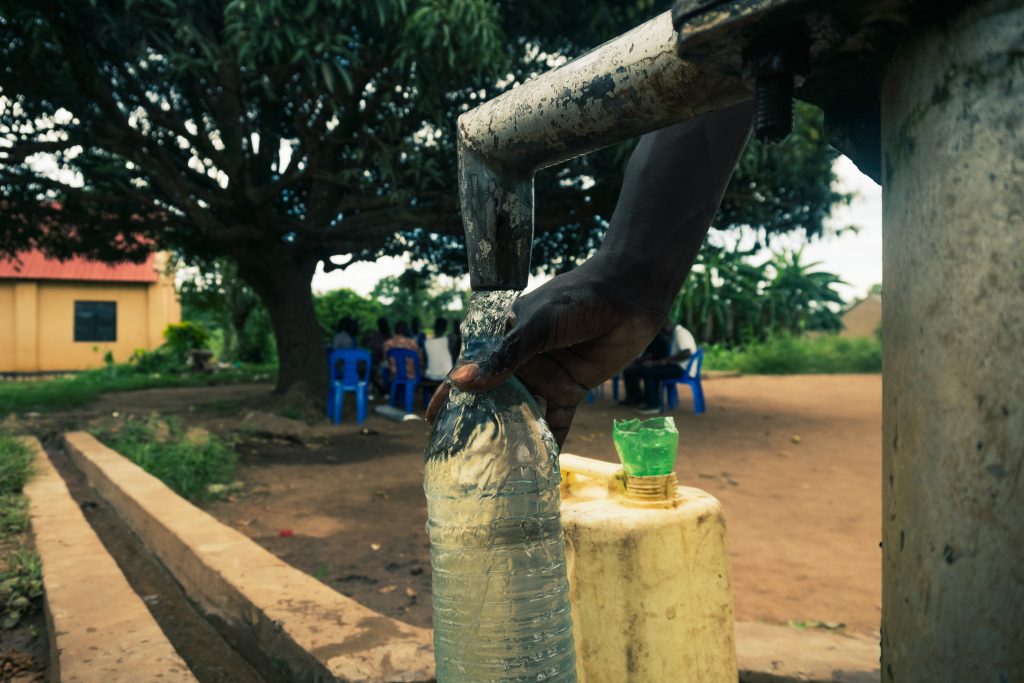
How a routine water quality test in Alito Sub-County changed everything for Ogwal’s village and what it means for hundreds of communities across Kole District.
The Morning Everything Changed
Akello Christine remembers the exact morning.
It was a Tuesday in early March, just as the first rains of the season were beginning to soften the cracked earth around Alito Sub-County in Kole District. She had risen before dawn, as she always does, to collect water from the borehole at the edge of the village before the queue formed. The pump handle was stiff in the cold morning air. The water ran clear and cold into her jerry can, the way it always had.
She carried it home on her head, the way she has done every morning for eleven years. She used it to make porridge for her four children. She used it to wash the youngest before school. She used it to brew the first cup of tea of the day for herself and her husband, Ojok James, before he left for the garden.
She had no reason to think anything was wrong.
Neither did anyone else in the village of Alik, a community of 312 households sitting in the low-lying farmland of Alito Sub-County, where three boreholes and one protected spring have served the community’s water needs for nearly a decade. The water had always looked clean. It had always tasted fine. And in a community where there is no laboratory, no testing kit, and no one trained to know the difference between water that looks safe and water that is safe, looking clean and tasting fine is all you have to go on.
But for three years before that Tuesday morning in March, the water in Alik had been quietly, invisibly, relentlessly contaminated.
And nobody had known.
A Community Carrying a Burden It Could Not Name
Looking back now, the signs were there, scattered across three years of daily life in Alik, visible only in retrospect.
The children had always seemed to have stomach problems. Akello had assumed it was the food, or the dust, or the way children are. Her youngest, a boy of seven named Ocen, had been hospitalised twice in two years with severe diarrhoea and dehydration. The clinic in Alito had treated him each time and sent him home. Nobody had asked about the water.
Ogwal Samuel, the village chairman, had noticed that the under-five mortality rate in Alik seemed higher than in the neighbouring village of Okwero, but he had no data to confirm it and no framework to investigate it. He had raised it once at a sub-county meeting in Alito and been told that child illness was a complex problem with many causes. He had gone home and said nothing more about it.
The village health team worker, a woman named Aber Grace, had been telling families for two years to boil their water before drinking, following standard public health advice in rural Uganda. Most families tried to follow it. But boiling takes firewood, and firewood takes time to collect, and time is the one thing that mothers in Alik do not have in abundance. By midday, when the jerry can that had been boiled in the morning was empty, families refilled it from the borehole and drank it as it came. Unboiled. Untested. Unknown.
The community of Alik was not being reckless. They were being human, making the best decisions they could with the information they had. And the information they had was wrong.
The Day WaterKit Arrived
In February of this year, as part of its partnership with Kole District Local Government, WaterKit Institute field teams began systematic water quality assessments across Alito Sub-County. The assessment protocol covered every registered water point in the sub-county: boreholes, protected springs, and communal water kiosks using a combination of portable field testing kits for immediate results and water samples sent to a certified laboratory in Gulu for full bacteriological and chemical analysis.
The field team reached Alik on a Wednesday morning. There were four of them: a WaterKit field officer named Okello Denis, a district water quality technician seconded from the Kole District Water Office, a community mobiliser, and a Water Quality Monitor trainee from a neighbouring village who was accompanying the team as part of her certification training.
They tested all three boreholes and the protected spring. They explained to the gathered community members what they were testing for and why. They took samples. They recorded GPS coordinates. They photographed the water point infrastructure, noting the condition of the apron, the drainage channel, and the surrounding area. At Borehole Number 2, the one closest to the centre of the village, the one most families used, the one Akello had been collecting from every morning for eleven years, the field team noticed something during the site assessment that made Okello Denis pause.
The concrete apron around the pump base had a hairline crack running along its eastern edge, small enough to miss on a casual inspection, significant enough to allow surface water to run back toward the borehole casing during heavy rainfall. Twenty metres to the north of the borehole, almost invisible in the long grass, was a disused pit latrine that had been abandoned three years ago when the family that owned it moved away. The pit had never been properly sealed.
Okello Denis said nothing to the community yet. He completed the assessment, collected the samples, and sent them to the laboratory in Gulu. He noted his field observations in the mobile data collection app and flagged the site for priority follow-up.
Three days later, the laboratory results came back.
The Results That Stopped a Village
The results for Borehole Number 2 in Alik village were among the worst the WaterKit field team had seen in their entire assessment of Kole District.
E. coli count: 340 colony-forming units per 100 millilitres. The World Health Organisation guideline for safe drinking water is zero. Total coliform count: 890 colony-forming units per 100 millilitres. Turbidity: within acceptable limits, the water looked clear. Nitrate levels: elevated, consistent with contamination from decomposing organic waste. The profile was unambiguous. Surface water contaminated by faecal matter, almost certainly from the unsealed pit latrine twenty metres away, running through the cracked apron during the rains and entering the borehole column, had been present in the water supply for an unknown period of time. Given the age of the crack and the condition of the abandoned latrine, the WaterKit field team estimated the contamination had likely been present for between two and three years.
Three years. Three hundred and twelve households. Every morning. Every cup of tea. Every pot of porridge. Every glass of water drunk by Ocen before school.
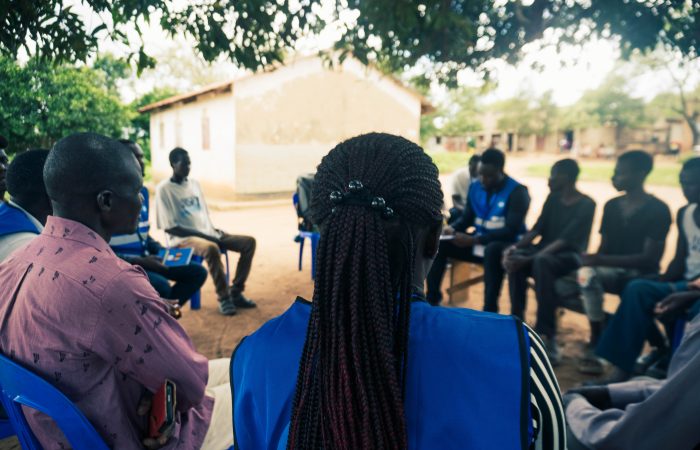
When Okello Denis returned to Alik to share the results, he brought with him the District Environmental Health Officer and a WaterKit community mobiliser trained in delivering difficult public health information. They called a village meeting under the central tree where Alik community has always gathered. They explained the results in plain language. They showed the community the colour-coded water quality report, red for the contaminated borehole, with the numbers translated into terms anyone could understand. Three hundred and forty units of faecal bacteria. The safe level is zero. This water has been making your children sick.
The village was quiet for a very long time.
Then Akello Christine spoke.
“I Kept Thinking About All the Mornings”
“I kept thinking about all the mornings,” Akello says now, sitting outside her home in Alik with her youngest son Ocen playing in the dust beside her. “Eleven years of mornings. Getting up before dawn. Carrying that water home. Making porridge. Feeding my children. Thinking I was doing the right thing. Thinking the water was clean because it looked clean.”
She stops. Ocen looks up at her and then goes back to his game.
“When they told us, I did not cry. I was too angry to cry. Not at WaterKit, for years. For all the years we did not know.”
Ogwal Samuel, the village chairman, describes the meeting as the most important thing that has happened in Alik during his tenure. “We had been sick for years, and we thought it was just life. We thought it was normal. When WaterKit showed us the actual numbers from a laboratory, we understood for the first time that it was not normal. That it could be different. That it should be different.”
Aber Grace, the village health team worker who had spent two years telling families to boil their water without knowing quite how urgently they needed to, simply says: “I wish we had known sooner. But I am glad we know now.”
The Response: Fast, Coordinated, and Community-Led
Within 24 hours of the laboratory results being shared with the community, WaterKit Institute activated its automated alert and response protocol. The contaminated borehole was immediately taken out of service, and a clear notice was placed at the water point advising the community not to use it. The WaterKit field team coordinated with the District Water Office to arrange emergency water trucking to Alik for the period of the repair, ensuring the community had access to certified safe water throughout.
The response to Borehole Number 2 in Alik proceeded in four parallel workstreams.
Infrastructure repair: a certified borehole rehabilitation team was deployed within five days to repair and reseal the concrete apron, reline the borehole casing at the point of suspected surface water ingress, and conduct a full mechanical overhaul of the pump. The team worked alongside two community members who were being trained as part of Alik’s new Water User Committee maintenance programme, so that the repair became a training opportunity as well as a fix.
Sanitation remediation of the abandoned pit latrine was identified, its former owners were located and engaged, and the pit was properly decommissioned and sealed under the supervision of the District Environmental Health Officer. A 30-metre exclusion zone around the borehole was mapped and documented in the district water point database to guide future sanitation planning in the village.
Water treatment bridging while repairs were underway, WaterKit Institute distributed household water treatment kits to every household in Alik: chlorine solution, safe storage containers, and water quality test strips, and ran a three-day community training on household water treatment and safe storage. Every household received a visit from a trained community health worker to verify correct implementation.
Community monitoring establishment Alik village now has its own Water Quality Monitor: a young woman named Lamunu Faith, 23 years old, who was selected by the community and trained by WaterKit Institute in the use of field water quality testing kits. Every month, Lamunu tests all three boreholes and the protected spring in Alik and submits her results through the WaterKit mobile data collection app. Her results appear on the district dashboard in real time. They are also posted on the water point information board beside every pump in the village, updated monthly, visible to everyone, in a colour code that requires no literacy to understand.
Six weeks after the contaminated borehole was taken out of service, laboratory testing confirmed that post-repair water quality at Borehole Number 2 met WHO guidelines across all parameters. The borehole was reopened at a community ceremony that Ogwal Samuel describes, with characteristic understatement, as “a day Alik will not forget.”
What Has Changed in Alik
Three months after WaterKit Institute’s water quality assessment identified the contamination at Borehole Number 2, life in Alik is measurably different.
Lamunu Faith submits her monthly water quality report with results that have been consistently within safe limits since the borehole reopened. Alik’s Water User Committee has established a maintenance fund with contributions from 287 of 312 households — one of the highest uptake rates in the entire programme area. The fund already has enough to cover two standard pump repairs without any outside support.
The village health team worker Aber Grace reports that diarrhoeal disease cases among children under five have dropped sharply in the three months since the borehole was repaired and household water treatment kits were distributed, though she is careful to note that three months is too short a period to draw definitive conclusions. She is tracking it.
Ocen has not been hospitalised once.
Akello Christine no longer collects water in the dark before dawn. She collects it in the morning, when there is enough light to read the information board beside the pump, the green circle that tells her, every month, that the water is safe. “I look at it every time,” she says. “Every single time. I never want to not know again.”
What Alik Taught WaterKit
The story of Alik is not unique. It is, in different forms, the story of communities across Kole District and across rural Uganda — communities drinking water they believe is safe because it looks clean. It has always come from that borehole because nobody has ever tested it and told them otherwise.
WaterKit Institute’s systematic water quality assessment across Alito Sub-County identified contamination at nine water points in total, not all as severe as Borehole Number 2 in Alik, but all requiring intervention. Across the broader Kole District programme area, elevated contamination has been detected at a significant proportion of tested sources, a finding that is now informing district water resource planning, sanitation policy, and national water quality reporting.
The lesson is not that Uganda’s rural water infrastructure is beyond saving. It is that it is largely unseen. Water that has never been tested is water whose safety is unknown — and unknown is not the same as safe.
The lesson is also that communities, given the right tools, the right training, and the right information, are extraordinarily capable of protecting their own water. Lamunu Faith did not exist as a water quality monitor six months ago. Today, she is the first line of defence for 312 households. Alik’s Water User Committee did not have a maintenance fund six months ago. Today, it can finance its own repairs.
What changed was not the community. What changed was what the community knew.
A Final Word From Alik
On the day the repaired borehole was reopened, Ogwal Samuel addressed his village under the central tree.
“For three years,” he said, “we drank from this borehole and did not know it was harming us. We cannot get those years back. But we can make sure it never happens again. We now have someone who tests our water every month. We have a board that tells us if it is safe. We have a fund to fix it if it breaks. And we have each other because we proved today that when this community knows what the problem is, we fix it together.”
He paused. Around him, 312 households of Alik village listened.
“The water is clean,” he said. “Let us keep it that way.”
WaterKit Institute Limited is a registered Ugandan non-profit working to ensure water security, sanitation, and climate resilience for Uganda’s most vulnerable communities. To support our water quality monitoring programme across Kole District and beyond, please get in touch.
📧 info@waterkitinstitute.org
📞 +256784069308
🌍 WaterKit Institute, Uganda